


- Internet
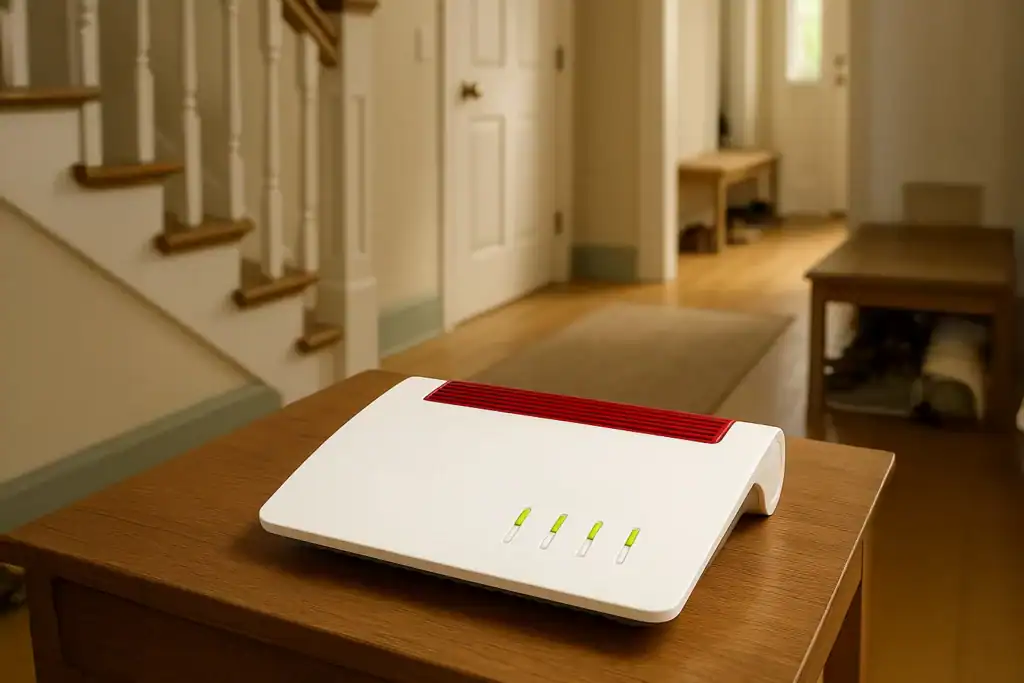
Boosting Wi-Fi in a multi-storey house: our tried and tested solutions
Have you subscribed to Luxembourg fibre, but your Wi-Fi still struggles to reach the upstairs bedrooms? You're not alone. In ...
Internet
min read / 1 January 2026
Personal data leaks no longer only affect large companies. Today, connected homes and small businesses are becoming prime targets: poorly configured IoT devices, weak passwords, increasingly credible phishing, vulnerable Wi-Fi networks, etc. The risks are multiplying. However, adopting robust home cybersecurity is more accessible than you might think. A few simple habits can drastically reduce attacks, whether you're protecting your children online or securing an SME without an IT department. This article provides step-by-step guidance on how to prevent data leaks and strengthen the security of your digital life in the long term.

According to the European Agency for Cybersecurity (ENISA), incidents involving personal data have increased by more than 35% in two years (source: ENISA Threat Landscape 2023).
The proliferation of connected objects (cameras, speakers, toys, thermostats, etc.) creates an ecosystem that is easy to exploit:
60% of French SMEs that have been victims of a data breach say they lack the internal resources to manage security (source: CESIN, Barometer 2023).
Cybercriminals are now using AI to generate virtually undetectable emails that perfectly mimic banks, government agencies, or transport companies.
Signs of phishing:
A simple password can be cracked in seconds using automated attacks.
Family networks are often set up quickly, without auditing or segmentation.
The most common errors:
Smartphones, tablets, laptops… but also connected TVs and IoT devices rarely receive critical updates.
Poorly configured shared spaces are among the primary sources of data leakage in SMEs.
A secure network is the first line of defence.
Choose a reliable, well-maintained box with a secure high-speed internet connection.
Essential settings:
Enable automatic updates to prevent exploitable vulnerabilities.
Priorities:
A good password manager allows you to create unique, complex passwords that are impossible to remember.
Useful features:
Ideally via an application (not by text message).
ANSSI estimates that two-factor authentication reduces more than 80% of intrusions linked to login credentials (source: ANSSI, Digital Hygiene Guide 2023).
Children are particularly vulnerable to scams, dubious downloads and fake accounts.
Recommended:
Before any optimisation, it is essential to map out:
Simple examples for a small organisation:
Automated, tested, stored offline or in a secure cloud.
Human error accounts for up to 82% of breaches (source: Verizon Data Breach Report 2023).
Even employees: every access must be controlled, restricted and encrypted.
Data leaks are not inevitable. By applying a few essential practices, families and SMEs can dramatically reduce the risks. Robust home cybersecurity not only protects your data, but also your peace of mind. To go further, don’t hesitate to check whether your current Internet connection offers a level of security that is appropriate for your environment: a stable, encrypted and updated network remains your best defence.
Notifications d’accès inhabituels, comptes verrouillés, emails inconnus envoyés depuis votre adresse, appareils plus lents que d’habitude.
Des services comme “Have I Been Pwned” permettent de vérifier si un identifiant apparaît dans une base de données piratée.
Oui, car ils reçoivent rarement des mises à jour. Une caméra ou une ampoule connectée non sécurisée peut servir de porte d’entrée.
Absolument. Des solutions simples comme la segmentation réseau, la 2FA et les sauvegardes automatisées réduisent fortement les risques.
Have you subscribed to Luxembourg fibre, but your Wi-Fi still struggles to reach the upstairs bedrooms? You're not alone. In ...

Moving house is already a race against time. Between packing boxes, dealing with paperwork and getting organised, getting internet access ...
Does your wireless connection seem slow in certain rooms? Before blaming your equipment, consider that the problem often lies in ...